


Coco Coir for Terrariums: Uses, Setup & Moisture Tips

Coco Coir for Terrariums: When to Use It and How to Set It Up
Coco coir can be a useful terrarium substrate, especially in humid or naturalistic setups where you want moisture retention and a surface animals can burrow into. It is not a universal choice. Whether it suits your terrarium depends on the animal, the type of habitat, its moisture needs, and the enclosure's ventilation and drainage.
This guide explains what coco coir is, how fine coconut fiber differs from coarse husk chips, and how to prepare and layer coir. It also covers managing moisture and ventilation together, and fixing common problems.
Is Coco Coir Good for a Terrarium?
Quick answer: Coco coir can work well in many humid and naturalistic terrariums because it holds moisture, is easy to burrow into, and looks natural. It is often a poor default for dry, desert-style enclosures. Choose it only after checking your species' substrate guidance, then manage moisture and ventilation together.
What Coco Coir Does Well
- Moisture retention. Coir helps hold moisture near the ground and within the substrate.
- Burrowing. Its loose texture lets many animals dig.
- Natural look. It resembles forest-floor soil.
- Blending. It is a common ingredient in naturalistic substrate mixes, such as the DIY blends described by ReptiFiles.
When Coco Coir May Not Be the Right Choice
- Enclosures intended to stay relatively dry.
- Setups without a plan for drainage and drying.
- Species whose care guidance points toward a different substrate.
- Situations where fine particles may cause problems. For example, ReptiFiles notes that coconut fiber can get dusty when dry; its ball python substrate guide also reports that fine coconut fiber may collect in a ball python's heat pits.
What Is Coco Coir? Coconut Fiber vs Coconut Husk Chips
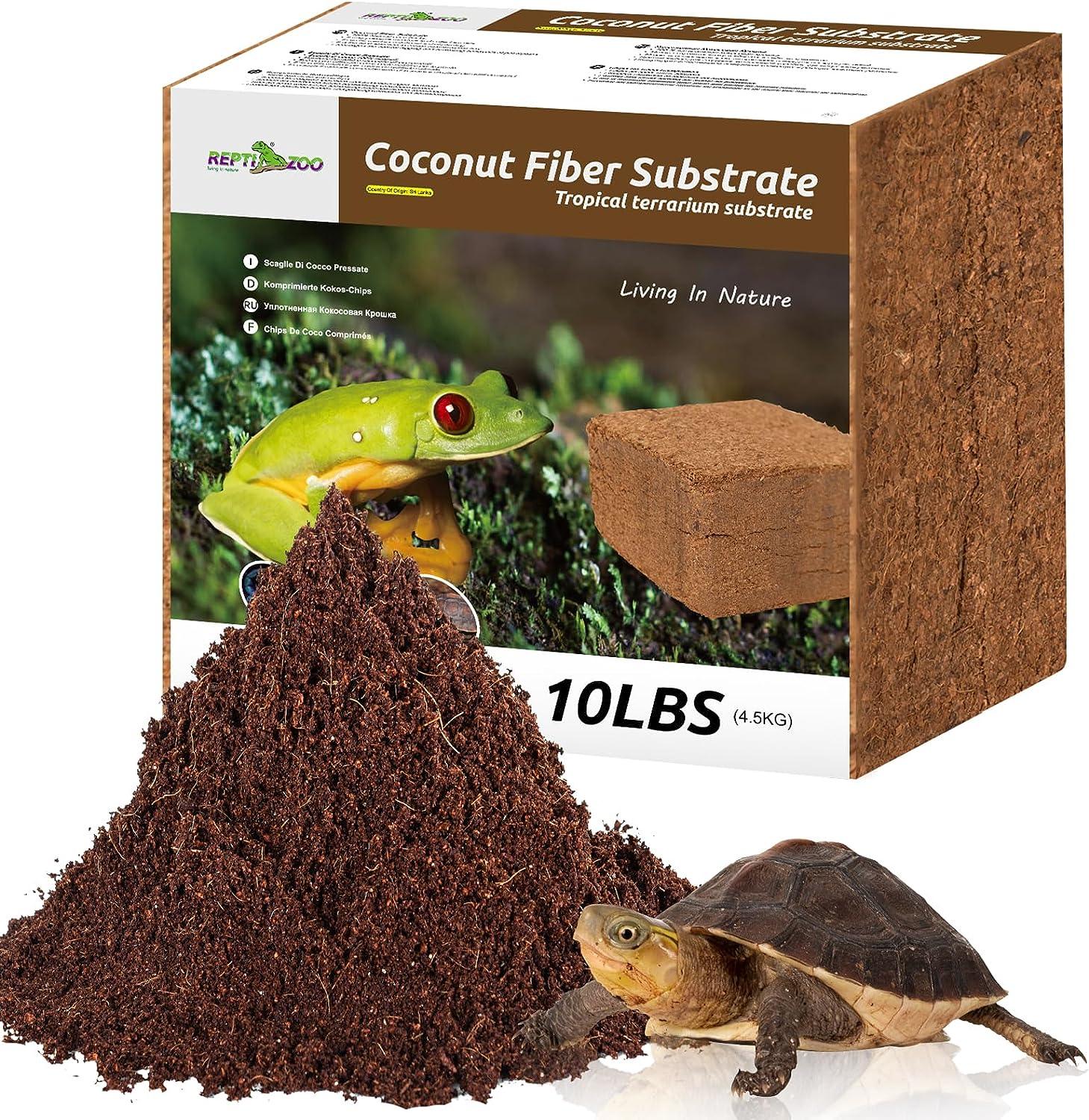
REPTIZOO Coconut Fiber Substrate — 72 Quart
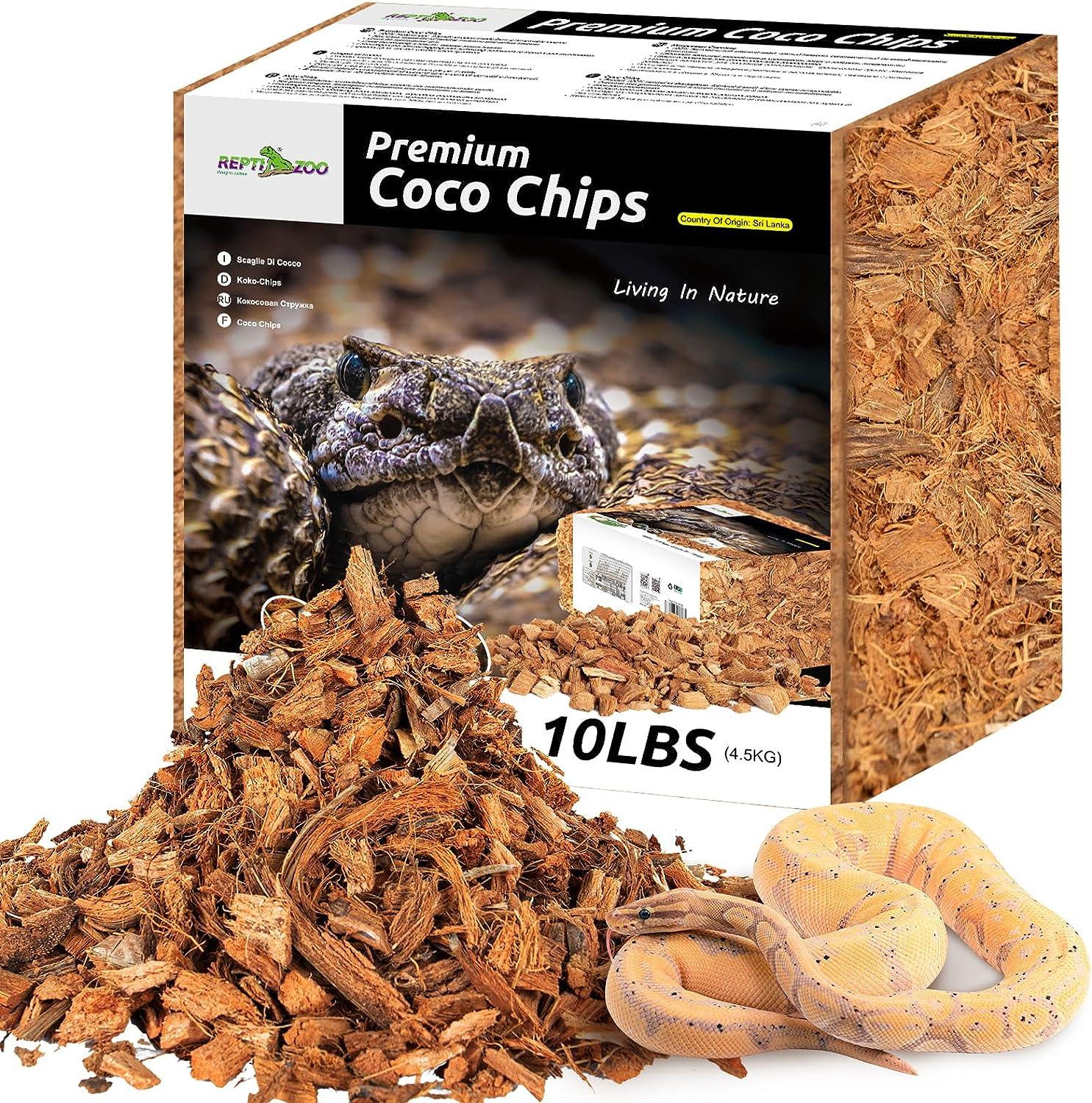
REPTIZOO Coconut Husk Chips — 72 Quart
Fine Coconut Fiber / Coir
Fine coir, sometimes called coconut pith, is a soft, soil-like material made from coconut husk. It is often sold as a compressed brick that expands when you add water, though not every product comes in the same form or size. It holds moisture well and is easy to burrow into.
Coarse Coconut Husk Chips
Husk chips are chunkier pieces of coconut husk. They leave more air pockets than fine fiber and are less prone to compacting. ReptiFiles describes coconut husk products as moisture-retentive and less dusty than fine coconut fiber.
Coir-Based Substrate Blends
Coir is often mixed with other materials such as topsoil or sand. A blend's drainage, structure, and planting performance depend on everything in it, not on the coir alone.
Table 1 — Coconut Substrate Comparison
| Material | Texture | Typical Use | Main Consideration |
|---|---|---|---|
| Fine coconut fiber | Soft, soil-like, fine particles | Burrowing; moisture retention | Can compact when wet and get dusty when dry; fine particles may stick to some animals |
| Coarse coconut husk chips | Chunky, airy | Humid setups where an airier, less dusty texture helps | Larger pieces; consider feeding method and species guidance |
| Coir-based blend | Mixed | Naturalistic and planted setups | Performance depends on the full recipe; not every blend is suitable for bioactive setups |
REPTIZOO offers fine coconut fiber substrate and coconut husk chip bedding. Because they are different materials, choose based on the texture your setup needs.
Which Reptile Terrariums Can Use Coco Coir?
Humidity-Dependent Tropical Setups
Coir can help hold moisture in tropical setups. Being a tropical species does not automatically mean coir is the right substrate, though. Follow guidance for your specific species.
Ball Python and Other Species-Specific Uses
ReptiFiles' ball python substrate guide separates three coconut-based options:
- Coconut husk products, such as branded husk chips. These are among its preferred choices, and the author notes a preference for the finer-textured version.
- Fine coconut fiber. This is listed as acceptable but not a favorite, because it can stick in a ball python's heat pits.
- A DIY tropical mix of topsoil, coconut fiber, and sand. This holds humidity well, but the source labels it as not bioactive-ready.
ReptiFiles also lists sphagnum moss and a bioactive substrate kit among its preferred options. No coconut product is presented as universally best. Choose based on your animal and setup.
Drier and Desert-Style Enclosures
A moisture-retentive substrate is usually a poor default for enclosures meant to stay dry. Check species guidance before using coir in these setups.
Table 2 — Habitat Suitability
| Habitat Type | Possible Role of Coco Coir | Key Caution |
|---|---|---|
| Humid tropical terrestrial | Main substrate, husk chips, or part of a blend | Avoid prolonged saturation; balance with ventilation |
| Ball python setup | Husk chips or a coir-containing mix are options per ReptiFiles | Fine fiber may stick in heat pits |
| Planted / bioactive vivarium | One component of a planting mix | Pure fine coir may lack structure and drainage |
| Large burrowing lizards | Possible component of a species-specific deep mix | Many require substantially larger or specialized enclosures than the example models below; do not select a tank from this article for such animals |
| Dry / desert-style | Usually not the default | Retained moisture may conflict with care needs |
| Amphibian setups | Possible component | Follow species guidance; see this poison dart frog enclosure setup guide |
How to Prepare Coco Coir for a Terrarium

Step 1: Select an Appropriate Reptile-Safe Product
Read the label. Look for products intended for reptile or terrarium use, and check for added fertilizers, wetting agents, or other additives. If the label doesn't say what the product contains, choose a better-documented one.
Step 2: Hydrate the Compressed Coco Coir
Follow the packaging directions. Water volume and soaking time vary by product and block size. Use a container large enough for the coir to expand fully.
Step 3: Break Apart and Fluff the Material
As it expands, break up the clumps by hand until the texture is loose and even. Mix thoroughly so there are no dry pockets.
Step 4: Check Moisture Before Installation
Squeeze a handful. This is a quick material check, not species-specific care guidance. If water streams out, the coir may be too wet for many intended setups, though the appropriate moisture level depends on the animal and habitat. Let it drain, or spread it out to dry. If it has become too dry for the intended habitat, add water gradually and reassess.
Step 5: Add the Substrate and Monitor Conditions
Spread the coir evenly. Over the next several days, check air humidity with a digital hygrometer, see how the surface dries compared with deeper layers, and look for areas that stay wet.
Coco Coir Preparation and Installation Checklist
- Product label checked for intended use and additives
- Coir hydrated according to the packaging directions
- Clumps broken apart and mixed evenly
- Squeeze test done; excess water drained
- Depth planned around door clearance and the enclosure's base design
- Hygrometer installed
- Monitoring plan for the first several days
How to Layer Coco Coir in a Reptile Terrarium
Simple Non-Bioactive Substrate Setup
In a simple setup, a single layer of coir, husk chips, or a coir blend covers the floor. Choose a depth that suits your species' guidance and still lets the front doors open cleanly. This keeps spot cleaning and full substrate changes easy.
Planted / Bioactive Layered Setup
A planted setup may use some or all of these layers:
- A drainage layer or false bottom. This gives excess water somewhere to go.
- A mesh substrate barrier. This keeps substrate from mixing into the drainage layer.
- A blended substrate. This supports plant roots.
- Leaf litter on top.
Not every tropical enclosure needs a false bottom. Whether you need one depends on how much water the setup receives, the plants, and the enclosure design. For more on water management, see the paludarium setup guide.
Substrate Depth, Door Clearance and Waterproof Bases
Before you add substrate, check:
- Usable depth. How much substrate fits below the door line.
- Door clearance. Front doors should open without pushing substrate out.
- Base construction. Some REPTIZOO models list a raised, waterproof bottom. Bases differ between models, so check the product page before you plan to hold water.
- Ventilation. Screen tops and side vents affect how quickly the substrate dries.
- Floor area vs. height. Extra height doesn't add floor area for terrestrial or burrowing animals.
Depth recommendations are species-specific. Follow guidance for your animal.
Managing Humidity, Drainage and Ventilation
Damp Substrate vs Saturated Substrate
Humidity and substrate moisture are related but different:
- Air humidity is moisture in the air, measured with a hygrometer.
- Substrate moisture is water held within the coir.
- Surface moisture is how wet the top layer is.
- Moisture gradient describes deeper layers staying wetter than the surface, or one side of the enclosure staying wetter than the other.
- Saturation is prolonged wetness, often from poor drainage or too much water.
A humid habitat doesn't require substrate that is wet all the time. Prolonged saturation is usually worth correcting.
How Enclosure Ventilation Changes Moisture Retention
Screen tops, side vents, room humidity, and misting habits all affect how quickly coir dries. Ventilation and moisture management should work together. Don't block necessary airflow just to raise humidity. Adjust substrate moisture, water placement, and misting as well.
How to Monitor the Substrate and Air Humidity
Check the hygrometer readings, feel the surface and a few inches down, and look for areas that stay persistently wet or dry out unevenly. Make small adjustments and recheck after each one.
Can You Use Coco Coir in a Bioactive Terrarium?
Why Coco Coir Alone May Not Be a Complete Planting Mix
Coco coir can be one component of a bioactive substrate. Pure fine coir, however, may not provide the structure, drainage, aeration, or planting support every setup needs, and it can compact over time.
Combining Coir With Other Suitable Components
Bioactive mixes often combine coir with other materials to improve structure and drainage. ReptiFiles labels one particular DIY topsoil–coir–sand blend as not bioactive-ready. That label applies to that recipe only, not to every substrate containing coir. Choose or build a blend that suits your animal, plants, and enclosure. Commercial bioactive-ready substrates are another option.
Common Coco Coir Problems and How to Fix Them
Coco Coir Is Too Wet
Check for poor drainage, heavy misting, or water pooling near the bowl. Reduce how much water you add, improve drainage, or replace the saturated sections.
Coco Coir Dries Out Too Quickly
Before misting more, check the ventilation, room humidity, and how thick the substrate is. Where appropriate for the species and enclosure, a deeper suitable substrate layer or a dedicated moist area may help. Misting more isn't always the answer.
Mold, Odor and Compaction
Occasional surface fungal growth can appear in damp, organic setups, but persistent or spreading mold, or a sour or rotten smell, deserves attention. Remove affected material, check for trapped water and waste, and address the conditions allowing it to recur. In a bioactive setup, harmless fungal activity may differ from contamination, so assess the affected area and the animal's condition rather than treating every visible fungus the same way. More airflow alone may not fix the problem. Loosen compacted substrate where appropriate, or reconsider the material or blend.
Ingestion and Feeding Precautions
PetMD advises feeding tortoises kept on indigestible substrates, including coconut fiber, off the ground in a separate enclosure to reduce accidental swallowing. Feeding methods vary by species. If you suspect your animal has swallowed substrate and it seems unwell, contact a reptile-experienced veterinarian.
Table 3 — Moisture and Substrate Troubleshooting
| Problem | Possible Cause | Recommended Check or Action |
|---|---|---|
| Prolonged wetness | Too much water; poor drainage | Reduce water added; improve drainage; replace saturated sections |
| Rapid drying | High ventilation; dry room; thin layer | Review ventilation and depth before adding more water |
| Unusual mold growth | Persistent wetness; waste | Remove affected areas; correct moisture; improve sanitation |
| Persistent odor | Waste buildup; anaerobic wet spots | Spot clean; replace affected substrate |
| Compaction | Fine texture; prolonged wetness | Loosen; consider husk chips or a blend |
| Excessive dust | Coir has dried out | Lightly re-moisten; consider husk chips |
| Possible substrate ingestion | Substrate taken in during feeding | Review feeding setup; seek reptile-veterinary advice if ingestion is suspected and symptoms appear |
Choosing REPTIZOO Substrate and a Suitable Terrarium
REPTIZOO Coconut Fiber vs Coconut Chips
REPTIZOO's organic coconut fiber is a fine, soil-like material, and its coconut chip substrate is chunkier. Both are 72-quart products made from coconut husk. Base your choice on your species' guidance and the texture your setup needs. You can compare more reptile substrate options.
REPTIZOO Enclosure Sizes for Different Habitat Layouts
Choose the enclosure for the animal first, then plan the substrate.
| Size | Possible Layout | Consideration |
|---|---|---|
| 18" x 18" x 24" (RK0110) | Compact vertical or tropical setup | Small floor area; suitable for some species and life stages only |
| 36" x 18" x 24" (RK0120) | Planted or mixed layouts | Screen ventilation affects moisture retention |
| 36" x 18" x 36" (RK0125) | Tall planted or arboreal setup | Height adds climbing space, not floor area |
| 48" x 24" x 24" (RK0240) | Larger terrestrial habitat | More floor space for substrate and hides |
| 48" x 24" x 36" (180 gallon) | Larger naturalistic display | Extra height for planting; check door clearance |
The product descriptions for the RK0110 and RK0125 mention raised, waterproof bottoms; the RK0120, RK0240, and 180-gallon listings also describe water-resistant or waterproof base construction. These features do not establish the same usable fill height for every model. Check door-line clearance, assembly requirements, and the manufacturer's instructions before adding deep substrate or any water feature. REPTIZOO also cautions that the RK0125's lock is not suitable for ball pythons, so it should not be presented as a ball python enclosure based on dimensions alone.

What to Check Before Buying an Enclosure
Before buying, confirm the enclosure provides appropriate floor and vertical space for your species, front access, ventilation that matches your moisture plan, clearance for the substrate depth you intend to use, and a base design that suits your setup. Browse front-opening reptile terrariums once you know what your animal needs.
Cleaning and Maintaining Coco Coir Substrate
Daily Spot Cleaning and Moisture Checks
Remove waste and soiled substrate promptly, and check moisture at the surface and a little deeper.
When to Replace the Substrate
How often you replace substrate depends on the animal, enclosure type, contamination, moisture, the condition of the substrate, the manufacturer's directions, and whether the setup is bioactive. The REPTIZOO coconut substrate pages give product-level maintenance guidance, which should be reconciled with the needs of the particular animal and habitat. Bioactive systems are managed differently from non-bioactive ones. For example, ReptiFiles' ball python guidance gives a monthly-to-quarterly replacement recommendation in the context of ball python care, while emphasizing cleaning after messes. That interval is not a rule for every reptile or for established bioactive systems.
Ongoing Maintenance Checklist
- Spot clean daily
- Check surface and deeper moisture
- Review hygrometer readings
- Look for unusual mold or persistent odor
- Loosen compacted areas
- Replace substrate when contaminated, saturated, or degraded
Frequently Asked Questions About Coco Coir for Terrariums
Is coco coir safe for reptile terrariums?
Coco coir is widely used in reptile terrariums, but it isn't automatically right for every species. Check guidance for your species, consider texture (fine fiber vs. chips), and use a feeding method that reduces accidental swallowing.
Can coco coir be used alone?
In some non-bioactive setups, yes. In planted or bioactive setups, coir is usually one component of a blend that adds structure and drainage.
How wet should coco coir be?
There's no single answer for every species. As a material check, coir shouldn't release a stream of water when squeezed. Base the target moisture on your species' guidance and your hygrometer readings.
Does coco coir need a drainage layer?
Not always. Planted or heavily watered setups often benefit from one, while simple setups may not need it. It depends on how much water you add and how the enclosure is designed.
Can coco coir grow mold?
Yes, especially with prolonged wetness, waste buildup, or poor airflow. Remove affected areas and correct the underlying cause.
Is coconut fiber the same as coconut husk chips?
No. Both come from coconut husk, but fiber is fine and soil-like, while chips are chunky and airy. They differ in dust, compaction, and how they hold moisture.
How often should coco coir be replaced?
There's no universal schedule. Replace it when it becomes contaminated, saturated, compacted, or smells persistently, and follow guidance for your species and setup type.
Build the Terrarium Around Your Animal's Needs
Start with the animal's requirements. Then decide whether coir suits it, plan for moisture and drainage, choose an enclosure configuration, and keep up with maintenance.
Planning a naturalistic reptile habitat? Explore REPTIZOO reptile substrates and front-opening terrariums to find materials and an enclosure that fit your animal's needs.
References and Further Reading
REPTIZOO Habitat Tip
A great reptile habitat starts with the right environment. Choose an enclosure that provides appropriate space, ventilation, lighting, temperature, and humidity for your reptile’s specific needs.
About REPTIZOO
REPTIZOO helps reptile keepers build complete habitats with thoughtfully designed terrariums, enclosures, lighting, heating, humidity control, and habitat accessories. Whether you're setting up a home for a bearded dragon, gecko, snake, chameleon, turtle, or other reptile, our goal is to make habitat building simpler, safer, and closer to nature.
Explore REPTIZOO habitat solutions and Live in Nature.