


Safe Plants for Bearded Dragons: Live Plant & Safety Guide

Quick answer: Commonly suggested live plants for bearded dragon enclosures include Haworthia and Haworthiopsis, Echeveria, elephant bush (Portulacaria afra), and carefully selected prickly pear cactus (Opuntia). These are plants to investigate, not a blanket safety guarantee. Confirm the botanical identity of each plant, check for chemical treatments and physical hazards, and remember that a bearded dragon may try to eat its enclosure greenery.
A beautiful planted tank must still function as a bearded dragon habitat. Keep the basking area accessible, provide appropriate UVB exposure and shaded retreats, preserve open floor space, and monitor temperatures and humidity after making changes. Below is a practical guide to choosing, preparing, and arranging plants without putting decoration ahead of your dragon's needs.
What Makes a Plant Safe for a Bearded Dragon?
The word safe can describe four different things. They are not interchangeable:
- Environmental fit: The plant can tolerate the light, temperature, airflow, and watering conditions in the enclosure.
- Physical suitability: It does not introduce reachable thorns, sharp leaf tips, unstable pots, or other obvious injury hazards.
- Ingestion considerations: There is credible, relevant reason to expect that incidental nibbling will not create an unacceptable risk. This is harder to establish than simply finding the plant on a recommended list.
- Dietary suitability: A particular plant part can appropriately be offered as food. That does not mean the entire living plant is suitable for a terrarium.
A plant may fit a warm, dry tank yet be unsuitable for chewing. Conversely, a leafy green that is useful as food might wilt in a hot, dry display. Plant identity matters too: common names can refer to different species with different chemical constituents. The Merck Veterinary Manual recommends identifying plants by scientific name when assessing possible poisoning.
Check the Plant, Not Just Its Name
Before choosing greenery, consider its exact species or cultivar, treatment history, accessible plant parts, and placement. Nursery plants may contain fertilizer pellets or may have been treated with pesticides. Washing can remove some surface residue, but washing does not reliably eliminate systemic pesticides absorbed by plant tissues. If the treatment history cannot be established, choose a different plant.
Also inspect for cactus glochids (tiny barbed bristles), spines, easily detached pieces, exposed roots, and pots that could topple. Drought tolerance does not by itself prove a plant is safe to eat, and not every succulent tolerates the hottest spot directly beneath a basking lamp.
Which Live Plants Are Safe for Bearded Dragons?
There is no useful one-word answer that applies to every plant sold under a common name. Reptile care resources such as ReptiFiles and Zen Habitats recommend several live plants for naturalistic bearded dragon habitats. The options below are husbandry-recommended candidates; being recommended does not establish that all species, cultivars, or plant parts are harmless if eaten.

| Plant candidate | Why keepers consider it | What to check before use | Placement idea |
|---|---|---|---|
| Haworthia / Haworthiopsis (Haworthia / Haworthiopsis spp.) | Compact succulent forms suit some naturalistic arid-style layouts | Confirm the particular plant, nursery treatments, and risk if nibbled; avoid intense heat without considering its needs | Protected middle or cooler area |
| Echeveria (Echeveria spp.) | Low-growing rosettes can suit a small planted corner | Species identification, chemical history, trampling, and root rot from overwatering | Cooler or moderate-light planting spot |
| Elephant bush (Portulacaria afra) | Branching foliage offers a different look from rosette succulents | Confirm it is P. afra, not a plant merely labeled “jade”; reptile ingestion evidence is limited | Secured container on the middle or cooler side |
| Prickly pear (Opuntia spp., selected cultivars) | Some forms tolerate bright, dry conditions | Inspect closely for spines and glochids, even if sold as “spineless”; do not infer all cultivars are safe to eat | Only where physical contact risks can be controlled |
Important: If you cannot confirm a plant's identity, treatment history, or important ingestion and physical safety concerns, leave it out. A plant-free section of the tank is better than a speculative addition.
Haworthia and Echeveria: Compact Succulent Options
Both groups appear on established reptile husbandry plant lists, but each contains multiple species and hybrids. Some plants once placed in Haworthia are now classified as Haworthiopsis. You may also see Echeveria sold as “hens and chicks,” a common name also used for Sempervivum. Ask for the scientific name instead of relying on a garden-center label.
Use a stable, modest planting area so the plant is not repeatedly crushed. Allow for the plant's own watering and light needs rather than assuming all succulents belong directly beneath a heat lamp.
Spineless Prickly Pear: Inspect for Glochids
Prickly pear pads can look appealing in a desert-style enclosure, but “spineless” does not always mean free from fine, irritating glochids. Inspect the specific plant carefully and do not expose the dragon to an unverified cactus. VCA Animal Hospitals lists “cactus” among foods that may make up a smaller part of a bearded dragon's diet; that broad dietary entry is not proof that every live Opuntia species or cultivar is safe in a tank.
Elephant Bush Is Not the Same as Jade Plant
Elephant bush is Portulacaria afra. True jade plant is Crassula ovata. Shops sometimes apply overlapping common names such as “dwarf jade,” so the scientific name is the useful distinction. Kew's Plants of the World Online recognizes Crassula ovata and lists Crassula argentea as a synonym. That botanical clarification does not settle the separate question of reptile ingestion safety.
Edible Greens Are Not Automatically Good Permanent Plantings
Some plants are better considered food items than permanent terrarium decorations. For example, VCA's bearded dragon feeding guide includes dandelion greens, cilantro, and parsley among vegetable options, while hibiscus and dandelion flowers appear among occasional flower treats. Verify the exact plant and avoid anything treated with chemicals. These may need different light, soil moisture, or growing conditions from an arid tank; they do not replace a balanced, age-appropriate diet.
Plants to Avoid or Treat With Extra Caution
Some popular houseplants contain compounds of concern in general animal toxicology literature. For plants with uncertain reptile-specific effects, the conservative choice is not to make them accessible for unsupervised chewing.
| Plant or group | Why it warrants caution | Practical decision |
|---|---|---|
| Aloe (Aloe spp.) | Some husbandry sources recommend it; Merck documents gastrointestinal irritant constituents and poisoning concerns in other animals | Do not treat it as a proven edible enclosure plant; consider another candidate |
| Jade plant (Crassula ovata) | ReptiFiles lists it, while the ASPCA lists jade as toxic to dogs, cats, and horses | Reptile-specific effects cannot be inferred either way; avoid an accessible plant until suitability is clarified |
| Pothos, philodendron, dieffenbachia | Contain insoluble calcium oxalate crystals associated with oral irritation in general animal toxicology references | Avoid where a dragon could chew the leaves |
| Kalanchoe (Kalanchoe spp.) | Merck reports cardiac glycosides in this succulent group | Do not use as an accessible enclosure plant |
| Many agaves and other spiny plants | Sharp leaf tips and spines can create physical hazards; identification also varies | Prefer plants without reachable sharp structures |
| Unknown or chemically treated plants | Unclear species, systemic treatments, fertilizer additives, or garden pesticides | Exclude until those concerns can be resolved |
This is a risk-screening list, not a bearded-dragon-specific toxicology diagnosis. Veterinary toxicology references often describe other animal species; those observations should not be presented as confirmed identical effects in reptiles. For an animal that regularly chews foliage, placing a questionable plant “just out of reach” may not be a dependable safeguard.
If your dragon has eaten an unidentified or potentially problematic plant, remove further access, photograph the plant, note when and how much may have been eaten, and contact a reptile-experienced veterinarian. Seek prompt veterinary help if unusual behavior or other concerning signs appear. Do not attempt home treatments or induce vomiting without veterinary instruction.
Live Plants vs. Artificial Plants: Which Is Better?
Live plants create natural shapes and can provide interesting spaces to investigate. However, they need suitable light, watering, and routine checks; the dragon may also uproot or eat them. Artificial plants do not need growing conditions but can shed pieces, be chewed, or collect debris.
| Decision factor | Live plants | Artificial plants |
|---|---|---|
| Main advantage | Natural growth and appearance | No watering or plant-growth lighting needed |
| Main limitation | Species suitability, moisture, damage, maintenance | Material durability and potential detached pieces |
| If the dragon chews it | Requires species-specific ingestion assessment | Detached artificial pieces may be swallowed |
| Routine care | Inspect, prune, water, remove failing material | Clean and check for damage or loose leaves |
Neither option is automatically safe. If your dragon persistently bites artificial foliage, remove it rather than hoping the material will remain intact. If a live plant's identity or treatment history is uncertain, do not introduce it merely for a more natural appearance.
How to Prepare Live Plants Before Adding Them to the Tank

Step 1: Confirm the Scientific Name
Check the label against a botanical reference such as Kew Plants of the World Online. Where a genus covers multiple species or cultivars, identify the actual plant as closely as possible. Do not rely on “succulent,” “jade,” or another broad retail label.
Step 2: Check Pesticide and Fertilizer History
Ask the grower or seller whether pesticides, systemic insecticides, fertilizers, or other treatments have been used. Do not assume a plant is untreated simply because it is sold for a bioactive terrarium. If there is no reliable treatment information, select another source. Rinsing leaves is not a substitute for knowing whether systemic treatments were applied.
Step 3: Inspect the Roots, Potting Mix, and Plant Structure
Look for pests, damaged stems, loose parts, thorns, and cactus glochids. Consider removing nursery potting material that contains fertilizer pellets or other additives and repotting into a growing medium appropriate for the plant and the reptile setup. Do not assume any loose soil is risk-free if swallowed. Keep drainage and water access in mind.
Step 4: Secure the Plant and Introduce It Gradually
Some keepers keep new plants separate temporarily to observe for pests, but there is no universally established waiting period that guarantees safety. Add only a small number at first. Stabilize pots and planting pockets so a digging or climbing dragon cannot tip heavy objects onto itself.
Step 5: Recheck the Animal's Environment
Watch how the dragon behaves around the plant. Recheck ambient temperatures, basking-surface conditions, humidity, and access to UVB and shade after changing the layout. Remove the plant if it introduces an unresolved safety concern or is being persistently chewed.
Before adding a live plant:
- ☐ Scientific identity checked
- ☐ Treatment history established
- ☐ Spines, glochids, loose pieces, and pests checked
- ☐ Potting material and fertilizer additives reviewed
- ☐ Pot or root ball secured
- ☐ Basking area, UVB access, hides, and walking routes remain clear
- ☐ Plant watering and drainage plan prepared
- ☐ Plan to monitor the dragon's interaction with the new addition
How to Arrange Plants in a Bearded Dragon Enclosure
Example: A 48" × 24" × 24" Planted Layout

A horizontal 48" × 24" × 24" enclosure is a useful planning example for many adult bearded dragon setups because it provides room to arrange basking, hiding, movement, and a small planted area. Exact housing needs still depend on the individual dragon and the complete husbandry setup.
Start with the animal's needs, not the plant arrangement:
- Warm end: Keep the basking platform stable and accessible, with the intended heat and UVB exposure unobstructed.
- Center: Preserve open walking and turning space. Secure any branches or rocks before adding decoration.
- Cooler end: Position a hide and, if conditions suit it, a small planted area with one or two carefully chosen plants.
- Planting pockets: Stabilize containers, keep watering localized, and check that the plant does not shade the main basking area or trap excess moisture.
- After installation: Observe the dragon and verify the setup again. A taller plant, branch, or raised platform can change the animal's distance from lamps.
You do not need to buy a new tank just to add plants if the existing habitat already meets the animal's needs and has sufficient usable room. For wider habitat planning, see our bearded dragon habitat setup guide.
For lighting placement and measurement, consult the bearded dragon basking light setup guide. Plant foliage should not be used as a reason to reduce appropriate basking or UVB access, and plant grow lights cannot replace reptile UVB equipment.
Considering a different enclosure layout? Compare REPTIZOO bearded dragon enclosures with enough usable floor space for your animal, equipment, hides, and a modest planted area.
Maintaining a Planted Bearded Dragon Habitat
Watering, Drainage, and Humidity
Water according to the plant's needs without unnecessarily soaking the entire enclosure. Plants and watering can change moisture levels, sometimes more noticeably around a planted corner. Check the enclosure's ventilation and monitor humidity rather than assuming every short-term increase is harmful—or that persistently wet substrate is acceptable.
Grow Lights Are Not Reptile UVB Lights
Some planted setups benefit from a dedicated plant grow light, as discussed by ReptiFiles. A grow light supports the plants; appropriate reptile UVB and heating equipment serve different husbandry purposes. Choose and position equipment for the specific enclosure and measure the resulting conditions after changing the layout.
Weekly Maintenance Checklist
- ☐ Remove damaged, fallen, or repeatedly chewed leaves
- ☐ Inspect plants for rot, pests, or excessive dryness
- ☐ Check planted soil and surrounding substrate for persistent dampness or mold
- ☐ Confirm pots, branches, hides, and rocks remain stable
- ☐ Check temperatures, humidity, and access to basking and shaded zones
- ☐ Ensure foliage has not blocked planned UVB exposure
- ☐ Replace or remove plants that fail or present new risks
Can Live Plants Be Used in a Bioactive Bearded Dragon Enclosure?
Yes, live plants can be part of a carefully planned naturalistic or bioactive system, but plants alone do not make an enclosure bioactive. Bioactive setups also involve a suitable substrate ecosystem and appropriate cleanup organisms. Root health, local watering, temperature and moisture gradients, and sanitation all still require attention.
For an arid or semi-arid setup, plan the system around the animal's needs and the selected plants' actual requirements. A cleanup crew is not a replacement for observation or routine waste removal. If you only want one or two decorative plants, a fully bioactive conversion is not necessary.
REPTIZOO Enclosure Options for a Naturalistic Setup
For a new or upgraded habitat, choose an enclosure around usable horizontal space, planned heating and UVB, and secure access—not simply around the number of plants you want to display.
The REPTIZOO RK0240 120-gallon glass terrarium measures 48" × 24" × 24". Its front sliding-door access and mesh-top construction can make it a practical example for planning basking structures, hides, and a planted corner. These enclosure features do not, by themselves, make every plant or installation safe.
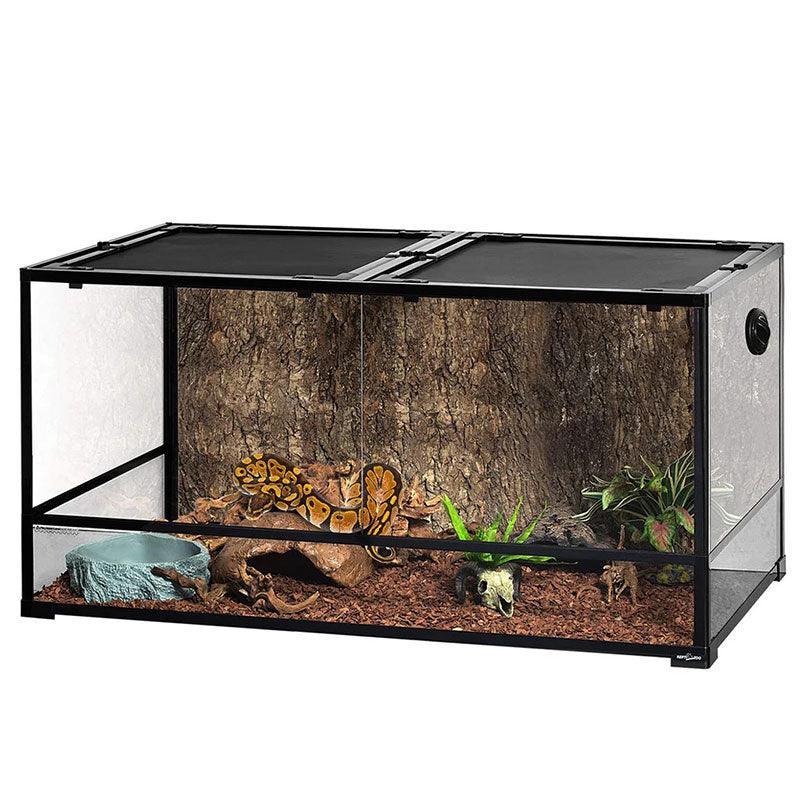
REPTIZOO also offers a 48" × 24" × 36" 180-gallon glass terrarium. Extra height may allow more varied décor, but it does not replace floor space and can affect the distance between the animal and overhead lamps. Compare enclosure configurations and actual setup requirements before choosing.
Common Planted-Enclosure Mistakes
Avoid choosing plants by common name alone, assuming any succulent is suitable, or treating a plant's ability to survive dry conditions as proof it is safe to eat. Do not introduce nursery plants with unknown pesticide histories, place sharp cacti within reach, or secure heavy pots poorly. Likewise, avoid crowding floor space, obstructing UVB or basking zones, soaking the substrate, or forgetting routine checks after plants have been installed.
FAQs About Safe Plants for Bearded Dragons
What live plants are safe for bearded dragons?
Husbandry sources commonly mention Haworthia / Haworthiopsis, Echeveria, elephant bush (Portulacaria afra), and selected prickly pear cactus (Opuntia). Treat them as candidates to evaluate rather than a blanket claim of ingestion safety. Confirm each plant's identity, treatment history, physical hazards, and suitability for your enclosure.
Can bearded dragons eat the plants in their enclosure?
They may try. A plant that tolerates an arid enclosure is not automatically appropriate food. Offer an age-appropriate diet separately, and do not install any plant that would present an unresolved hazard if chewed. Ask a reptile-experienced veterinarian about uncertain ingestion risks.
Is aloe vera safe for bearded dragons?
Some reptile husbandry resources recommend aloe as décor, but general veterinary toxicology sources report concerns with aloe ingestion in other animals. These findings do not establish exactly how a bearded dragon would respond. Rather than assume it is safe to nibble, choose an alternative when the risk cannot be clarified.
Is jade plant safe for bearded dragons?
Jade plant (Crassula ovata) appears on some husbandry lists, while the ASPCA records toxicity in several mammal species. Neither source conclusively establishes its ingestion safety for bearded dragons. It is also distinct from elephant bush (Portulacaria afra), which may be sold under similar common names.
Are succulents safe for bearded dragons?
Not as a category. Succulents encompass many unrelated plants, including Kalanchoe, for which Merck documents compounds of toxicological concern in animals. Confirm the specific species, any physical hazards, and the likely consequences of chewing before choosing a plant.
Can I put pothos or other houseplants in a bearded dragon tank?
Common houseplants such as pothos, philodendron, and dieffenbachia contain irritating calcium oxalate crystals according to general veterinary toxicology references. Their exact effects in bearded dragons are not established by those sources. Avoid placing them where a dragon can nibble the leaves.
Are artificial plants safe for bearded dragons?
Durable artificial décor may work in some enclosures, but artificial leaves can be bitten off or swallowed. Check for loose components and chewing, and remove the decoration if your dragon repeatedly attacks it. No artificial plant should be considered universally safe.
Do live plants increase humidity in a bearded dragon enclosure?
They can, particularly when their soil is watered. The amount depends on the plants, watering, ventilation, and enclosure conditions. Monitor with a hygrometer, keep damp areas under control, and adjust the planting arrangement if it interferes with the habitat's needs.
Final Thoughts: Build the Habitat First, Then Add Plants
Start with reliable botanical identification and treatment history, consider what happens if the plant is chewed, and check that its shape and watering requirements suit the enclosure. Keep basking, UVB, hiding space, and movement routes accessible. Add plants gradually, then continue to observe both the plants and your dragon.
When you are ready to improve the overall setup, explore REPTIZOO bearded dragon tank decor and bearded dragon enclosure options to plan a functional naturalistic habitat.
References and Further Reading
REPTIZOO Habitat Tip
A great reptile habitat starts with the right environment. Choose an enclosure that provides appropriate space, ventilation, lighting, temperature, and humidity for your reptile’s specific needs.
About REPTIZOO
REPTIZOO helps reptile keepers build complete habitats with thoughtfully designed terrariums, enclosures, lighting, heating, humidity control, and habitat accessories. Whether you're setting up a home for a bearded dragon, gecko, snake, chameleon, turtle, or other reptile, our goal is to make habitat building simpler, safer, and closer to nature.
Explore REPTIZOO habitat solutions and Live in Nature.